
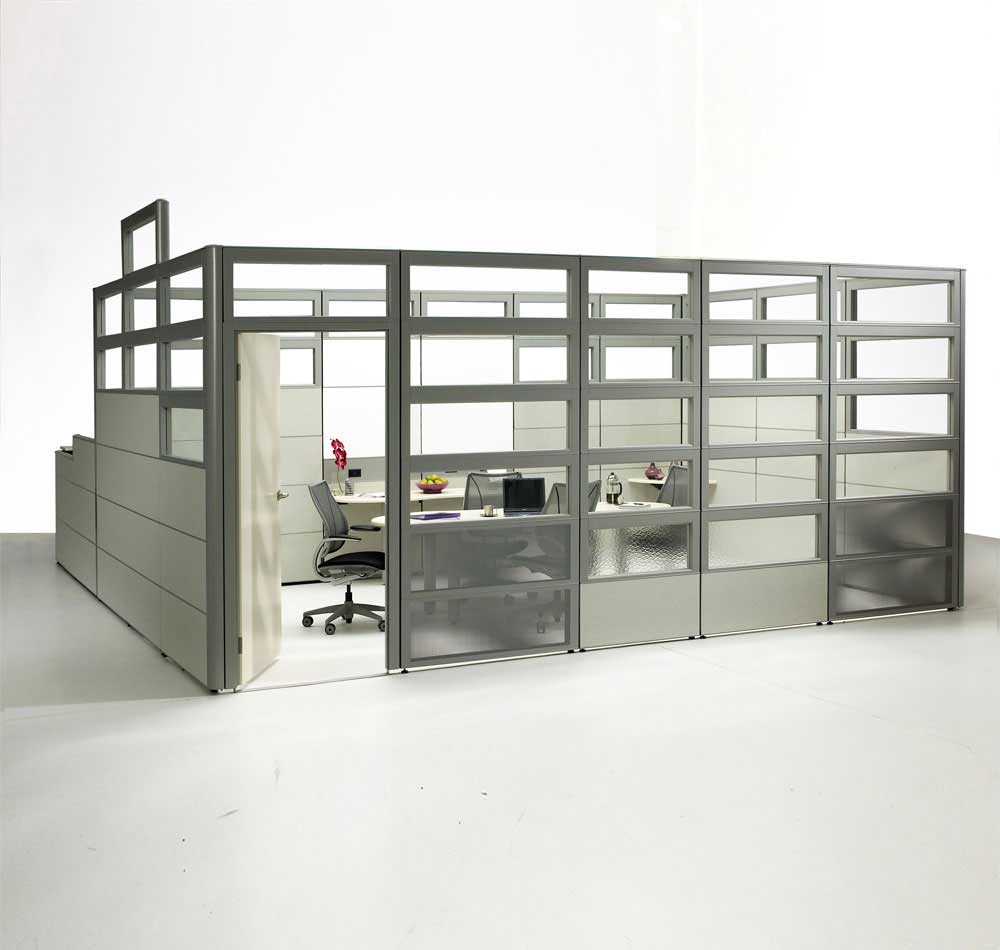
Three Lessons for Workplace Transformation

I have recently been working with a team, implementing workplace transformation at a mid-size organization. “Workplace transformation” is an integrated approach to people, process, and place that blends industry leading practices with new, innovative approaches to facility design, construction, and management. As the team has progressed through this initiative, we have learned to quickly adapt to new scenarios and try out new ideas and methods in order to successfully execute the project.

…driving transformation

It has been more than fifteen years since the move into a new headquarters building.  The space was state-of-the-art; approximately 400k square feet in a prime downtown location. Today, the furniture and fixtures are in dire need of a refresh; and the space has grown more and more inefficient as the organization grows and the need for space changes. These inadequacies in the physical space impact the morale and productivity of the persons working and visiting the building. Senior leadership decided to tackle this issue by rethinking the current operating model and injecting innovation in the way that space is used. This sparked an enterprise initiative for workplace transformation. A key component of the initiative roll-out was a pilot project that included the partial renovation of the headquarters building.

Traditional facility upgrades consider departmental headcount multiplied by a square foot figure, typically in the range of 200-300 square feet per person. The improvements tend to look similar to the previous space only with new furniture and finishes. This new approach was different. The team began by asking the occupants, “HOW do you work?” and subsequently designed a space that fit those specific needs. By aligning the space with the business processes and increasing both internal and external mobility, the implementation team was able to significantly reduce space needs, thus decreasing overall occupancy costs. In addition, they leveraged advances in technology, as well as new and emerging human capital policies in order to implement new workplace strategies.

… learning lessons and getting better

While the workplace transformation initiative is relatively young, the team has recognized three key lessons that helped to navigate the process, reach milestones, and meet goals.

1.        Don’t do it alone.

Typically, a corporate initiative is assigned to a team that takes on the sole responsibility for planning and implementation, often within a contained environment. Our first success came with the realization that we could not do it alone, and that we needed to expand the team concept. We started by identifying critical roles then matched our needs with internal and external resources. This composite gave the team insights and expertise from several perspectives, which has helped us avoid many of the pitfalls that tend to sidetrack similar projects. For example:

  • Members from our internal management team were able to craft a vision that defined our parameters and helped the team stay on message.
  • Our facilities group provided insights into the impacted program operations and the existing physical space that has created situational awareness.
  • The architects conceptualized a design that brought together the components into a visually aesthetic, highly functional design with a flexible layout.
  • Change management team members were able to rationalize our design concepts and introduce the human element into the equation, improving our likelihood of success by increasing adoptability of our initiative.
  • Our technical experts take the goals and objectives from leadership, and analyze our plans and concepts, in order to formulate a business case that rationalizes a set of preferred alternatives. This diligent effort will help ensure that our decisions are based on sound logic and make good business sense from a financial perspective.

We also have significantly involved the senior leadership in this effort; to the extent that C-level offices and divisions are taking part in the initial phase. Their vision has guided the team’s direction, and their hands-on involvement has grounded our perspective, helping the team focus on realistic goals and set obtainable milestones.

2.        Communicate, communicate, communicate

We can’t say this enough. Start early and communicate often with as many stakeholders as you can. It can be painful at times, especially early in the process, when plans are still being formulated. There is a natural tendency to hold back until the core message has been solidified and approved by upper management. However, in the absence of feedback from other stakeholders, the message can suffer from lack of clarity and myopia.

In order to mitigate the risks of communicating a message too early, our team worked with senior leadership to build a simple, straight-forward message. We then built onto this core message in phases, recruiting feedback from focus groups of trusted stakeholders, represented by the impacted programs and support functions.

We continue to actively communicate our message to various audiences within the organization, as well as with external stakeholders. We invited the participation of future occupants of the workspaces to voice their visions, and have been pleasantly surprised by the candid outlook and the willingness to embrace change. Our grassroots style of communication has proven effective in generating buy-in from the greater community, and has helped our team to be successful in rolling out the implementation.

3.        It’s an evolution, not a revolution

Workplace Transformation is an evolutionary process, with each generation benefiting from learning opportunities and feedback during planning and implementation. GenOne of workplace transformation involves a smaller renovation project, merging an improved workplace with organizational goals and mandates. This project is integrating technology with the workplace, thus increasing collaboration and workforce flexibility. The lessons learned from this effort will be rolled into the planning for on-going phasing of the initiative.

Early in the process, our team recognized that this effort would take time to impact the larger organization, and that space needs would continue to be an issue throughout the implementation of workplace transformation. In response, we developed an integrated approach that meet the need for space capacity while aligning with plans for the future and efficiently managing resources. Using innovative space layouts designed for collaboration, the facilities team works with business units to increase capacity and meet configuration needs; utilizing freestanding furniture and optimizing existing infrastructure. Our proactive approach to supporting interim needs, while introducing new concepts, has enhanced the implementation team’s credibility; thereby helping promote the roll-out of the larger workplace transformation initiative.

… and finally

Workplace transformation is a continuous improvement initiative. By embracing change proactively, an organization can use workplace transformation to emerge stronger and more nimble; better able to address challenges in the competitive marketplace.
Posted in Uncategorized | Leave a comment

New Presidential Memo on Energy Savings Performance Contracts (ESPC)

This past month, December 2nd, 2011, the President issued follow-up guidance and support for Executive Order 13514 in the form of a memo for Energy Savings Performance Contracts (ESPC). The concept is industry-proven and has been around for a while – just check out this 2002 EPA presentation on the benefits of ESPC.
An ESPC is based upon the authorization activated in 1992 and 2005 by the Energy Policy Act (EPAct) that allows Agencies to use private sector financing mechanisms for energy conservation projects. This authority was supported and enhanced with the issuance later EPAct versions, as well as the issuance of the Energy Independence and Security Act (EISA) of 2007.
The recent Presidential Memorandum directs Agencies in three main areas that include the following:
1. Implement and Prioritize Energy Conservation Measures (ECM). Agencies’ capital investment plans should integrate ECMs that have a payback period of less than 10 years. Potential projects are to be prioritized return on investment. ESPC will be a major vehicle for funding these projects, however direct appropriations should also be considered. There is a mandated goal of $2 billion in ESPCs by January 2014.

2. Complete Required Energy and Water Evaluations. Section 432 of EISA2007 establishes a framework for tracking, reporting, and benchmarking energy initiatives. Agencies use Department of Energy’s Compliance Tracking System (CTS) to reporting on completed ESPC projects and perform regular assessments of facilities to ensure compliance and capture performance metrics.

3. Maintain Transparency and Accountability. This section of the memo directs Agencies to automate data collection and reporting, thus reducing the level of effort and increasing efficiencies. Agencies are encouraged to “connect meters and advanced metering devices to enterprise energy management systems to streamline and optimize measurement, management, and reporting of facility energy use”.
These mandates are designed to help the US Government realize cost savings while collecting data for business intelligence efforts for continuous improvement and better portfolio management. As time passes, these directives will drive down the amount the USG energy bills, benefit the taxpayer, and stimulate an important part of our innovation economy.

Posted in Uncategorized | Tagged , , , , , , | Leave a comment

REPRINT: Adoption of International Green Construction Code gaining traction

September 5, 2011—Facilities teams working in buildings throughout Florida, North Carolina, Oregon, Scottsdale, Arizona and other parts of the United States may notice their buildings are even more sustainable and energy efficient as a result of their communities focusing on safe and sustainable construction as determined by The International Code Council’s International Green Construction Code (IgCC), a regulatory tool created to increase energy efficiency and complement voluntary green building rating systems.

Florida has adopted the IgCC as an option for the retrofitting and new construction of all state-owned facilities. Previously, Florida law did not recognize any kind of green construction code, only voluntary rating systems. The legislation specifically allows the IgCC to be used by the Department of Management Services and encourages state agencies to adopt the IgCC as a model green building code that will apply to buildings financed by the state, including county, municipal, school districts, water management districts, state universities, community colleges and state court buildings.

The North Carolina Building Code Council adopted the Rainwater Collection and Distribution Systems section of the International Green Construction Code Public Version 1.0 with amendments, which is expected to enhance the North Carolina Plumbing Code Appendix on Rainwater. The state’s plumbing code is based on the International Plumbing Code with North Carolina amendments and is already in use throughout the state.

The 2011 Oregon Commercial Reach Code features energy-related provisions of the IgCC Version 2.0 with amendments. The IgCC was flexible enough to adapt to Oregon’s needs and integrate with the existing I-Codes that the state currently uses. The State of Oregon Building Codes Division developed the optional “reach code” that includes construction methods and technology to increase energy efficiency. Builders across the state can now use this optional code to develop high-performance new construction projects as well as retrofits.

In Scottsdale, Arizona, the IgCC will replace and update the city’s voluntary commercial green-building program in an effort to encourage developers of commercial and multifamily buildings to pursue green development projects.

– Source: Facility Management News

Posted in Uncategorized | Leave a comment

Turning a Disaster into an Opportunity with Economic Development

When I started the Federal City project over five years ago, it was nothing but a concept with little hope for a future. Hurricane Katrina had just devastated the region and New Orleans had been all but abandoned. Immediately after Katrina hit the Gulf Coast, I left my comfortable office in Washington, DC and moved back home to Alabama to help with the rebuilding in the region. I witnessed the ongoing impact to the Gulf Coast community first-hand, and was not certain that I would see the day when the area might rebound from such an awesome tragedy. After six months, I returned to the world of management consulting and jumped on the opportunity to return to the Gulf Coast and assist the Algiers community with the largest economic development project in the history of the state of Louisiana. On June 27, 2011, the Marine Corps Reserves moved into the first facility built in Federal City; completing the first stretch of a long road to recovery. La joie de vivre!

Posted in Uncategorized | Tagged , , | Leave a comment

What is Tax Increment Financing (TIF)?

We often hear of terms in real estate that get thrown around with little to no explanation. I would like to take a few minutes to shine a light on the TIF concept and use.

Tax Increment Financing (TIF) is a tool for financing economic development. While conceptually similar, individual TIF programs and legislation are uniquely designed and applied in each state that has authorized the use of this financing mechanism. The low-interest debt that is issued to developers on behalf of the government is backed by future gains in tax revenues. Typically these tax revenues originate from increased property values, but alternative tax bases, such as increases in sales tax volume can also be considered as collateral. Some quick notes about TIF include the following:

  • Not a tax credit program, unlike historical tax credits, new market tax credits, energy tax credits, etc.
  • Rule of Thumb ratios of private to public funding (TIF is a portion of the public financing mix) range from 8:1 to 12:1. However the public funding is typically front-loaded on the project schedule to account for heavy investment in public infrastructure.
  • Due to budget constraints, has become the primary (in some cases, the only) tool that municipalities use to finance improvements related to the public benefit.
  • Freezes collection of tax increases in designated TIF districts in order to fund debt offerings. In some cases the freeze is 20+ years.
  • Can set-aside portions of debt to fund social programs such as workforce development, job retention, libraries, schools, daycares, etc. This will help alleviate community concerns of lost tax revenues.
  • Reserved for blight, brownfields, or targeted industry growth; but in most states, greenfield development is accomplished under the umbrella of “economic development”
  • TIFs do not directly affect tax rates in the community, but may raise overall tax collections due to increased property values and sales volume.
  • TIF needs are assessed using at least one of the following three categories:
    1. TIF District Designations (Blight, Economic Development, etc.)
    2. “But For” test
    3. Cost/benefit analysis
  • Typically administered through the local redevelopment agency.

I hope this article helps the reader better understand what TIF is, and how it can be administered. If you have additional questions, please drop me a note.

Posted in Uncategorized | Tagged , , , | Leave a comment

The US Investing in the US? Moving AFRICOM Stateside

The United States Africa Command, also known as U.S. AFRICOM, is one of nine Unified Combatant Commands of the U.S. Department of Defense (DoD). As one of six that are regionally focused, it is devoted solely to Africa. U.S. AFRICOM is responsible to the Secretary of Defense for U.S. military relations with 53 African countries. The command was created by presidential order in 2007 and was officially activated October 1, 2007. It became fully operational October 1, 2008, with General Kip Ward serving as its first commander.  General Carter Ham became the second commander of U.S. AFRICOM on March 9, 2011, just in time to address the challenges of relocating headquarter operations from Stuttgart, Germany to the US.

Recent speculation, has AFRICOM relocating approximately 1,500 positions to either a) Charleston, SC on or near the Charleston Air Force Base or Naval Station; b) Hampton Roads, VA to replace the Joint Forces Command that has recently been shutdown, and c) Atlanta, GA at either Robbins Air Force Base or Fort MacPherson, which has recently undergone a BRAC action.

At a recent hearing, billed as posture hearing for AFRICOM and U.S. Transportation Command, a number of Defense Department officials expected Libya to be the lawmaker’s prime focus. But relatively few questions focused on military operations, many actually focused on U.S. military involvement in Africa as a whole and TRANSCOM operations. But a good number of comments involved the location of AFRICOM’s headquarters. Defense Secretary Robert Gates has asked AFRICOM Commander Ham to examine the “stationing” of AFRICOM’s headquarters, which is currently located in Stuttgart, Germany.

“He’s essentially asked me to start from a clean sheet of paper,” Ham said during Tuesday afternoon’s HASC hearing.

Prior to AFRICOM’s stand-up in 2007, U.S. Central Command, U.S. European Command and U.S. Pacific Command all oversaw portions of the vast continent. Ham will be examining numerous factors, including security, suitability, quality of life, transportation nodes and accessibility to the Africa when evaluating potential locations.

“That process has begun,” he said. “We will look at first of all to make sure we’ve got the methodology right and then we will look at a wide variety of locations to see which we think would make the most suitable for the command to accomplish its mission.”

That said, numerous members of the House Armed Services Committee feel their communities have what it takes to host the combatant command.

Rep. Joe Wilson, R-S.C., was the first to dive deep into the subject, touting Charleston, his birthplace.

“Charleston in the transportation hub for the Unites States Transportation Command, as well as the primary seaport for container traffic between the Unites States and the South Atlantic,” he said. “The Charleston Air Force Base provides all the strategic airlift support for Africa, for our government to include embassy support.”

Wilson also touted the “cultural linkage” he observed during a visit to west African country Liberia.

“The great cultural association of west Africa to Charleston is very clear,” he said. “It’s a shared culture, in fact we have the same accents and I felt right at home when I was visiting with the people in Monrovia.”

Although, he’s not a frequent visitor to Charleston, Ham is a fan of the city. “I’ve only had the opportunity to visit Charleston once, but it was just a few years ago and it was indeed a very enjoyable visit to a great city,” he said.

But Rep. Hank Johnson, D-Ga., would have none of that and touted his home state’s busy commercial cargo operations at Hartsfield-Jackson Atlanta International Airport, military aviation facilities, its colleges and the state’s quality of life.

“When I’ve been to South Carolina, Charleston, I’ve enjoyed myself in that area, but I would also point everyone to the fact I live in the Atlanta, Georgia, area, which is the transportation hub of the southeast,” he said.

Enter Rep. Austin Scott, R-Ga., who represents Georgia’s eighth district, which includes Robbins Air Force Base. It’s also not far from a number of other Air Force and Army bases. “Both the Air Force and the Army are extremely important to us and as you look for additional commands, I think [in] Georgia, you’ll find welcome and open arms there.”

But there were those members representing districts even further west that wanted to tout their home state — or territory in one case.

“I were to tell you about all the advantages of living on a tropical island, it would take all day, so we’ll put it off for another time,” joked Delegate Madeleine Bordallo, D-Guam.


Ref: Transcripts from U.S. AFRICOM Public Affairs at www.africom.mil

Posted in Uncategorized | Tagged , , | Leave a comment

Space as a Corporate Resource: Decoupling Individual Ownership Perceptions.

Why is telecommuting so hard? What is it about the office environment that creates the expectations for ownership of space? While the company may pay for a cubicle or a corner office, the individual employee is typically the “owner” of that space and is reluctant to part with or even share that resource. As a consultant, I often talk with clients about workplace strategies that typically involve the evolution of space from a 1:1 desk to employee ratio to a use model that is more open, collaborative and flexible. Cultural issues create complexity in implementation when individuals reject the idea of losing their space… treating their office or cube like a scared object for which they will protest for and defend against the “space invaders” (pardon the pun). Why? Simply put, these persons are unable or unwilling to evolve their perception of space and the role that it plays in their ability to perform work.

About five years ago, I read a book that to this day influences my thinking on the separation of source from use. Blown to Bits is an observation on the economic impact of information being separated from the traditional physical distribution model (i.e. a book, stone tablets, billboards). It struck me that treating information as a corporate resource and separating it from the delivery source, is not unlike the separation of a particular space from an individual and treating space as a corporate resource that is managed for the best use at a given point in time for a particular goal achievement.

What does this mean? It means that by disaggregating space and creating a flexible set of use types we can help employees perform their jobs and increase productivity. This allows employees to use each space for its intended purpose and capacity, thus increasing effective utilization. Without assigned space, the employee evolves perception from one of space ownership to integration of space and performance.

Posted in Uncategorized | Leave a comment

Having trouble delivering real estate services? Maybe its your organization.

You are a manger of facilities and real estate assets for your company. You have a good team that services the customers within the organization, acquiring space, managing projects, administering leases, etc. However, there always seems to be hiccups in delivering these services. You receive requirements late, and thus you deliver services slower than desired by your customer. Your cost controls don’t seem to work as planned, and your processes seem a bit frazzled and disconnected. The key to strengthening your organization is to focus on improving organizational core competencies.

Read my article here: Exploring Avenues for Transformation


Posted in Uncategorized | Leave a comment

The U.S. Government wants to dump supply in a weak commercial real estate market.

Recently, the Federal government announced the intent to reduce real estate spend by disposing of 14,000 excess properties. The U.S. Government is one of the largest landlord in the world and I admit that there is a lot of potential to save the taxpayer money. However, is selling assets at a discount in a bad market really a good idea? Will there even be buyers? What is the potential return?

While I agree that disposing of thousands of assets and millions of square feet is beneficial, I believe that there is a lot of other considerations. The government owns a LOT of specialized assets that make it difficult to recognize full value (think: DOE laboratories or VA clinics). They also support programs that require operations in remote or specialized areas (think: CBP border stations and FEMA logistics). I would suggest a tiered approach to better recognize value for the taxpayer. It will not have the most immediate impact, but it will arguably offer the best value. The approaches that I would recommend are:

  1. Accommodating future growth in existing space, thereby eliminating more expensive future costs by occupying space with lower retro-fit costs. This requires an extensive internal marketing effort among civilian and military government organizations to share information and work together to realize value.
  2. Selling assets in prime real estate markets that will have immediate returns. This will require coordination with the private sector to align with development pipelines in local communities.
  3. Employing alternative workplace strategies that allow reduction in footprint. Then, activate a strategy such as lease moratoriums to reduce current and future spend.
  4. Create value in remaining asset clusters. The government would have to act more like a master developer to enact environmental cleanup and invest in initial infrastructure to make the properties more attractive to investors. This approach will likely require Public-Private Partnerships (P3) to recognize the full value. Examples of this approach would be Plum Island and many of the Base Realignment and Closure (BRAC) projects.

By following these basic steps, the Federal government can enhance the buyer market, reduce current spend, and generate better returns. I would love to get more thoughts on the issue at hand, so please pitch in with your comments!

Posted in Uncategorized | Leave a comment

What if GSA took a page from OGC’s playbook?

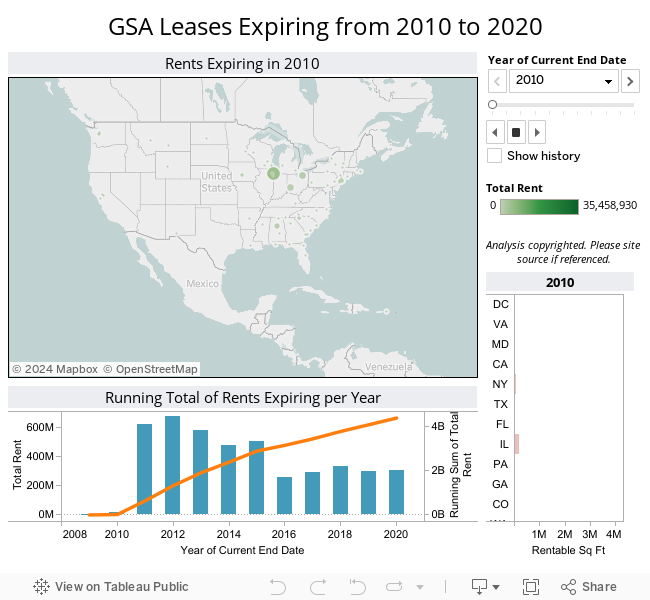
Recently the UK’s version of GSA put a moratorium on leases. That made me wonder, “what would happen in GSA did something similar?”. I went to GSA’s website and downloaded publicly-available data on leases. GSA’s current lease vs. owned portfolio is tilted towards leases at ~55% of the total portfolio. Let’s assume for a moment that GSA were to put a moratorium on renewing expiring leases, and instead directed requesting agencies to implement alternative workplace strategies and relocate to Federally owned space as appropriate. This scenario does not consider employee future growth which can range from 5-15% per agency and further drive the need for space. By simply not renewing expiring leases, GSA can cut more than $2 billion in rents by 2014! Check out the data analysis below and explore this scenario for yourself.


Posted in Uncategorized | Leave a comment